


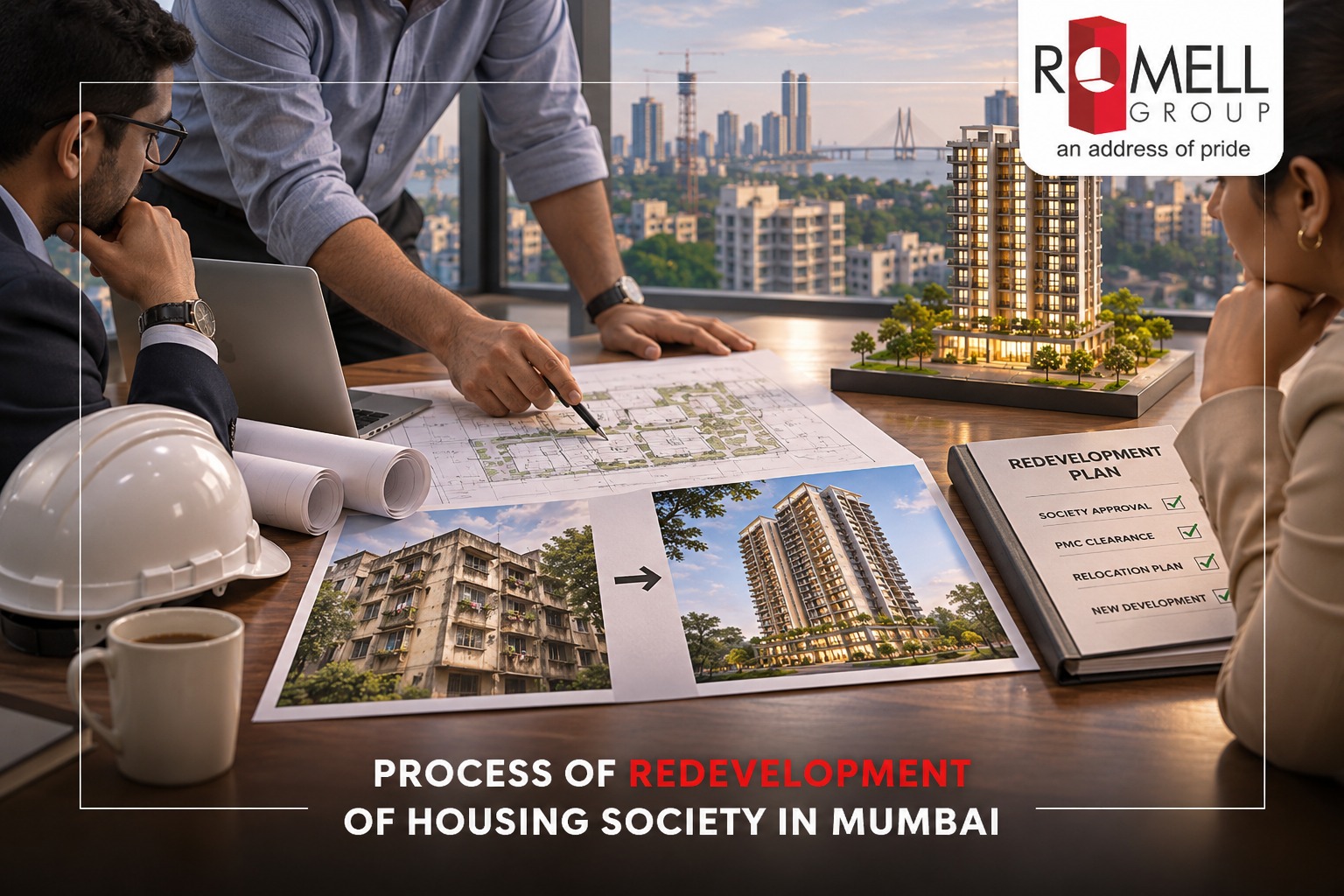
Process of Redevelopment of Housing Society in Mumbai
Redevelopment has become an important route for older housing societies in Mumbai where buildings may require major structural repairs, modernization, or better use of available development potential. But redevelopment is not simply a matter of selecting a builder and vacating the building. It involves decisions by society members, technical assessments, legal documentation, developer selection, approvals, agreements, construction, and eventual possession.
For a housing society , understanding what is the process of redevelopment of housing society in Mumbai helps members make informed decisions and avoid confusion at critical stages. The exact procedure can vary depending on the type of property, land ownership, applicable development regulations, society structure, and government or local authority requirements.
What Is the Process of Redevelopment of Housing Society in Mumbai?
The process of redevelopment of society generally begins when members consider whether repairing the existing building is sufficient or whether redevelopment is a more practical long-term solution. The society may first assess the building’s condition through a qualified structural or technical professional.
If redevelopment appears necessary, the society typically moves through several stages: obtaining professional advice, conducting a feasibility assessment, calling a general body meeting, deciding on redevelopment, preparing requirements, inviting proposals from developers, evaluating bids, selecting a developer, executing the necessary agreements, obtaining approvals, and commencing construction.
The process should be documented carefully because redevelopment affects the homes, finances, rights, and obligations of every member.
Step 1: Assess the Existing Building and Redevelopment Feasibility
Before approaching developers, a society should understand the condition and potential of its property. A structural assessment can help determine whether the building has significant deficiencies or whether extensive repairs could reasonably extend its useful life.
A redevelopment feasibility study can examine factors such as plot area, existing carpet areas, development potential, applicable development control regulations, road width, reservations, setbacks, permissible FSI, rehabilitation requirements, and other site-specific considerations.
This stage is important because a developer’s proposal should ultimately be evaluated against the property’s actual potential rather than attractive but unverified promises.
Step 2: Appoint Professionals and Establish Society Requirements
Redevelopment involves technical, financial, and legal issues, so societies commonly seek assistance from appropriate professionals such as architects, project management consultants, lawyers, and financial experts.
The society should establish clear requirements before inviting proposals. These may include the proposed additional area, temporary accommodation or rent arrangements, corpus, shifting expenses, amenities, construction specifications, project timeline, security provisions, and consequences of delays.
Having clearly defined requirements creates a more consistent basis for comparing different developer proposals.
Step 3: Hold the Required Society Meetings
A redevelopment decision should follow the applicable cooperative housing society framework and procedural requirements. Society members should receive adequate information about the proposal and the matters being considered.
The general body should discuss issues such as the need for redevelopment, feasibility, appointment of consultants, developer-selection methodology, and other relevant decisions.
Proper notices, agendas, minutes, resolutions, attendance records, and supporting documents should be maintained. This documentation can become particularly important if disagreements arise later.
Step 4: Invite and Evaluate Developer Proposals
Once the society’s requirements are established, proposals can be invited from suitable developers.
Members should avoid evaluating proposals only on the basis of the highest promised additional area or corpus. A comprehensive assessment should consider the developer’s financial capacity, redevelopment experience, completed projects, construction quality, reputation, litigation history, proposed project timeline, technical approach, and ability to obtain necessary approvals.
The society’s professional advisors can help compare commercial terms and identify clauses or assumptions that require clarification.
New Rules for Redevelopment of Society: What Members Should Check
People searching for the new rules for redevelopment of society should be careful about relying on social-media summaries or outdated redevelopment guides. Redevelopment requirements can change through government resolutions, co-operative housing society regulations cooperative housing society regulations, development control regulations, circulars, and local authority procedures.
In Mumbai, the applicable framework can also depend on the nature of the land and project. Members should therefore verify the latest requirements with the relevant authority and qualified legal or technical professionals before taking a final decision.
Important areas to review include member consent and resolutions, developer selection, documentation, project approvals, transit accommodation, bank guarantees or other security mechanisms where applicable, timelines, and members’ rights under the redevelopment agreement.
Step 5: Select the Developer Through a Transparent Process
Developer selection is one of the most important stages in redevelopment.
The society should create objective evaluation criteria and compare shortlisted developers on both commercial and non-commercial factors. A developer offering slightly more area may not necessarily represent the strongest proposal if its financial capacity, track record, or execution capability is weaker.
Members can examine the developer’s completed projects, quality of construction, history of delayed projects, regulatory records, financial strength, and experience with similar redevelopment projects.
The final selection should be properly recorded through the society’s prescribed decision-making process.
Step 6: Negotiate and Execute the Redevelopment Agreement
Once a developer is selected, the commercial and legal terms must be converted into detailed contractual documents.
The redevelopment agreement should clearly address the rights and obligations of the society, members, and developer. Areas requiring careful attention can include the Permanent Alternative Accommodation Agreement (PAAA), additional carpet area, corpus, rent, shifting expenses, temporary accommodation, possession timeline, delay consequences, specifications, approvals, insurance, dispute resolution, and termination provisions.
Members should obtain independent legal advice before signing documents. Verbal commitments made during presentations should not be treated as substitutes for properly documented contractual obligations.
What Is the Procedure for Redevelopment of Building?
The procedure for redevelopment of building can broadly be understood as a sequence:
Building assessment → feasibility study → appointment of professionals → society decision → developer proposals → developer evaluation → selection → agreement → approvals → vacating and transit arrangements → construction → completion approvals → possession.
The actual sequence may vary depending on the property’s legal status, land ownership, development regulations, project type, and authority requirements.
The society should also ensure that important approvals are obtained before construction proceeds and that members receive appropriate documentation throughout the project.
Step 7: Approvals, Construction and Transit Arrangements
After the agreement is executed, the developer generally proceeds with project planning and statutory approvals applicable to the project. Depending on the circumstances, this can involve municipal permissions, planning approvals, environmental requirements, fire-related approvals, and other clearances.
Members may need to vacate their existing premises according to the agreed redevelopment schedule. Transit accommodation or rent arrangements should therefore be clearly established before members hand over possession.
During construction, the society should maintain communication with the developer and project professionals. Regular updates can help members understand construction progress, approval status, expected milestones, and any emerging issues.
Step 8: Completion, Possession and Handover
The final stage involves completing construction and obtaining the applicable completion and occupancy-related approvals.
Members should not treat physical completion of the building as the only milestone. The society should verify that the necessary permissions and documentation are in place before possession.
The handover process can include allocation or confirmation of flats, documentation, amenities, common areas, maintenance arrangements, and other obligations under the redevelopment agreement.
Members should preserve copies of relevant agreements, approvals, correspondence, and possession documentation for their records.
Common Mistakes Housing Societies Should Avoid
Redevelopment decisions can become difficult when societies focus exclusively on the developer’s financial offer. Some common mistakes include selecting a developer without adequate due diligence, failing to obtain independent legal advice, relying on verbal commitments, overlooking delay protections, and not clearly documenting the promised specifications.
Another risk is treating every Mumbai redevelopment project as though it follows an identical process. Site-specific factors can materially affect feasibility and approvals.
A society should therefore approach redevelopment as a structured project rather than a one-time commercial transaction.
How Can a Society Make Redevelopment More Secure?
The strongest redevelopment process combines member participation, professional due diligence, clear documentation, developer evaluation, and continuous monitoring.
Members should ask practical questions before approving a proposal: Who owns the land? What is the project’s development potential? What additional area is actually feasible? How will members be accommodated during construction? What happens if the project is delayed? What security is available? Which approvals are required? Who bears specific project expenses?
Answering these questions before signing major documents can help reduce misunderstandings later.
Conclusion
Understanding what is the process of redevelopment of housing society in Mumbai is the first step toward making a well-informed decision. Redevelopment typically involves building assessment, feasibility analysis, professional appointments, member decisions, developer selection, legal agreements, statutory approvals, construction, and eventual possession.
There is no substitute for project-specific legal and technical due diligence. Mumbai societies operate within a regulatory environment that can involve multiple authorities and rules, so members should verify the current requirements applicable to their particular property.
A carefully structured redevelopment process can help a society balance better housing, improved amenities, commercial feasibility, and long-term security while protecting the interests of its members.
FAQs
What is the process of redevelopment of housing society in Mumbai?
The process generally includes assessing the existing building, conducting a feasibility study, appointing professionals, taking the required society decisions, inviting and evaluating developer proposals, selecting a developer, executing agreements, obtaining approvals, completing construction, and handing over the redeveloped premises.
What are the new rules for redevelopment of society in Mumbai?
Redevelopment requirements depend on the applicable cooperative housing society framework, development regulations, government directions, and project-specific circumstances. Societies should verify the latest applicable requirements with the relevant authorities and qualified professionals rather than relying on outdated information.
What is the procedure for redevelopment of building?
The broad procedure involves building assessment, feasibility analysis, society approval, developer selection, contractual documentation, statutory approvals, construction, completion approvals, and possession. The precise procedure can differ according to land ownership and the nature of the project.
How should a housing society select a redevelopment builder?
Members should consider the developer’s redevelopment experience, financial strength, completed projects, construction quality, regulatory track record, litigation history, proposed commercial terms, and ability to deliver the project within the agreed framework.
How long does society redevelopment take in Mumbai?
There is no universal timeline. It depends on the property’s legal and technical circumstances, approvals, developer capabilities, construction requirements, and other project-specific factors. The agreed timeline and consequences of delay should be clearly documented in the redevelopment agreement.
Should a society appoint a lawyer for redevelopment?
Independent legal advice is strongly advisable because redevelopment involves significant contractual, property, cooperative-society, and regulatory considerations. The society’s lawyer should review the proposal and agreements in the interests of the society and its members.